
Black Diamond Stingray for Sale
Within contemporary ornamental aquaculture, the Black Diamond Stingray has come to occupy a distinctive, and arguably contested, position among elite freshwater species. People often group it with other South American river rays, but a closer look suggests otherwise. Its visual patterns, genetic lineage, and breeding history make it hard to classify. Aquarists and breeders now focus on this species not only for its looks.
They also value its role in talks about hybridisation, pure lineages, and long-term care.
At a visual level, the Black Diamond Stingray usually has a dark base color with high-contrast white or cream spots. Yet, it would be reductive to treat this pattern as uniform or predictable. Variations in spot density, size, and distribution often reflect underlying genetic diversity, which in turn has implications for both valuation and breeding strategies. Some specialists have argued that these variations complicate attempts to standardise grading systems, thereby introducing a degree of interpretive flexibility into the marketplace.
Genetic Lineage and Breeding Considerations
Discussions surrounding the Black Diamond Stingray frequently intersect with broader debates in ornamental fish breeding, particularly those concerning hybrid vigour versus lineage integrity. Although some breeders focus on preserving distinct bloodlines, others use controlled crossbreeding to improve color and resilience. This tension highlights a bigger split in the field. We need to balance visual quality with environmental and ethical concerns.
Prospective keepers may therefore wish to approach acquisition with a degree of critical awareness. It is not just about choosing a ray that looks striking.
It also means knowing its provenance and breeding history. You should also consider how the ray may develop over time. For a wider look at compatible species and care tips, check our Freshwater Stingrays collection.
It offers more context.
It also makes comparisons easier.
Habitat Requirements and Long-Term Care
Maintaining a Black Diamond Stingray in captivity requires more than adherence to basic aquarium guidelines. Water quality, substrate composition, and tank dimensions all play a significant role in determining long-term health outcomes. While some hobbyists suggest that these rays are adaptable, you should treat such claims cautiously. Empirical observations indicate that stable parameters, including low ammonia levels and consistent temperature ranges, are essential for minimising stress and preventing disease.
In addition, you should not overlook dietary considerations. A varied feeding plan with high-quality protein may support growth and color.
The right balance can vary with age and metabolism. For detailed care practices and technical insights, external resources such as
Seriously Fish provide valuable, research-informed guidance.
Why Choose a Black Diamond Stingray?
The appeal of the Black Diamond Stingray comes from its bold look and the thought it inspires. Ownership often entails ongoing learning, observation, and adaptation, rather than a static or purely decorative experience. In this sense, we can view the species as both an aesthetic and epistemic investment. It rewards sustained attention and informed practice.
Those who want to grow their collection can also explore our curated Arowana fish selection. People often discuss Arowana alongside stingrays in advanced aquascaping circles. Together, these species contribute to a dynamic and evolving discourse within the ornamental fish community.
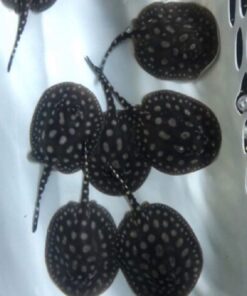
Black Diamond Stingray