
Pearl Stingray for Sale
The Pearl Stingray occupies a somewhat understated yet increasingly significant position within the ornamental fish trade. Although it may not always have the bold look of high-contrast species, its appeal lies elsewhere. People value the Pearl Stingray for its subtle color.
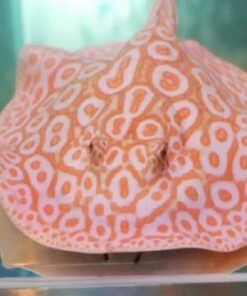
It has fine, light spots across a darker disc, not bold pattern saturation. These traits invite slower, more attentive viewing, and they fit broader aesthetic discussions in aquascaping communities.
From a classificatory standpoint, people do not always use the term “Pearl Stingray” with strict taxonomic precision. In some contexts, it may refer to specific regional variants or selectively bred lines within the Potamotrygon genus.
This ambiguity has led to ongoing debate among breeders and hobbyists, particularly regarding naming conventions and lineage transparency. While some practitioners call for clearer genetic records, others stress real trade needs and natural variation. They suggest categorisation is still partly interpretive, not fully fixed.
Pattern Formation and Aesthetic Interpretation
One defining feature of the Pearl Stingray is its pattern, which shows smaller, more closely spaced spots than other freshwater rays. These markings can look almost iridescent in some light.
They can seem to change as you move. It would, however, be reductive to attribute this entirely to surface appearance. Some aquarists suggest that diet and water quality may affect color over time.
However, these claims still need more scientific proof.
For aquarists seeking to situate the Pearl Stingray within a broader comparative framework, our
Freshwater Stingrays collection
Provides access to many species and variants. Each one adds different insights on pattern diversity and husbandry practice.
Care Practices and Environmental Stability
As with other members of the Potamotrygonidae family, the successful maintenance of a Pearl Stingray depends on carefully regulated environmental conditions. Aquarists widely regard stable water chemistry, low levels of nitrogenous waste, and appropriate tank dimensions as essential. While some anecdotal accounts suggest a degree of tolerance to minor fluctuations, you should approach such perspectives with caution. Evidence from long-term aquarist observations shows that consistency is a more reliable predictor of health outcomes than adaptability.
Feeding strategies also warrant attention. A varied diet with nutrient-rich foods may support growth and color, though needs can vary by individual. External resources such as
offer detailed, research-informed discussions that complement practical experience within the hobby.
Context Within Advanced Aquascaping
The Pearl Stingray is often selected by aquarists who prioritise balance and subtlety in tank design. Its presence does not typically dominate the visual field; instead, it contributes to a more integrated and layered composition.
This has led some to argue that its value lies in more than individual appearance. Its value also comes from its role in the aquarium environment. Such a perspective shifts the focus from isolated specimens to broader ecological and aesthetic systems.
For those interested in developing a cohesive aquatic display, species such as
are frequently considered alongside stingrays due to their complementary spatial dynamics and shared environmental requirements.
Others