
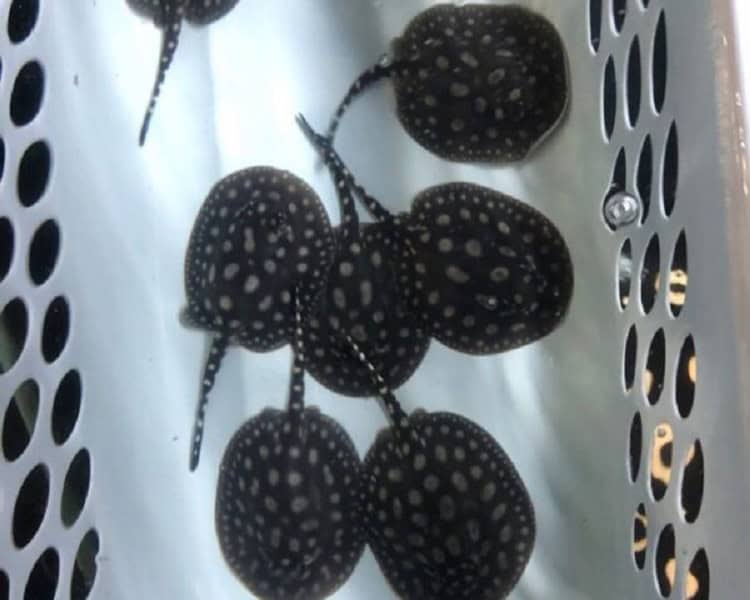

Black Diamond Stingray Female US
The Black Diamond Stingray Female is a rare and highly sought-after freshwater species. It belongs to the Dasyatidae family and stands out for its deep black body and bright white spots. Because of this unique pattern, many aquarists consider it one of the most beautiful stingrays available.
Most freshwater stingrays originate from South American rivers, especially the Amazon basin. In these environments, they live in warm, slow-moving waters with soft, sandy bottoms. Therefore, recreating these conditions in captivity is essential for their health and long-term survival.
To better understand proper care and habitat setup, review our
complete stingray care guide.
Physical Characteristics
The Black Diamond Stingray has a rounded and smooth body. Its upper surface displays bright white spots, while the underside remains plain and lighter in color. In addition, its eyes sit on top of its body, allowing it to detect movement above.
Moreover, this species uses advanced sensory organs near its mouth to detect electrical signals from prey hidden in the sand. As a result, it can hunt efficiently even in low visibility conditions.
Behavior and Feeding
Black Diamond Stingrays are generally calm; however, they require careful handling. They prefer to stay at the bottom of the tank and often bury themselves in the substrate. Additionally, they feed on crustaceans, worms, and other small invertebrates.
Before introducing a stingray into your aquarium, it is important to learn
proper acclimation methods. This step reduces stress and significantly improves survival rates.
Tank Requirements
Provide a large aquarium with ample bottom space. Ideally, adult stingrays require at least 180 gallons for proper long-term care. Furthermore, use fine sand as the substrate and avoid sharp decorations that may cause injury.
- Use fine sand to allow natural burying behavior
- Maintain stable water temperature and parameters
- Avoid sharp objects or rough decorations
- Ensure strong filtration and regular water changes
Consistent water quality is essential. Therefore, regular maintenance and monitoring will help prevent common health issues and ensure steady growth.
Availability and Value
Black Diamond Stingrays are rare and expensive due to their unique genetics. In most cases, they are captive-bred, which improves their adaptability to aquarium life. Consequently, their demand remains high among serious collectors.
For additional conservation insights and species data, visit the
IUCN Red List database. It provides global information on species status, threats, and protection efforts.
1 review for Black Diamond Stingray Female
Add a review
Related products
Others
Others

Aquarium Equipment

Others
Others
Others
Frank Kesh –
This is my best!