
Uncategorized
Golden Arowana Growth Rate Explained: Size Chart and Development Patterns
Mar
Golden Arowana Growth Rate Explained: Size Chart and Development Patterns
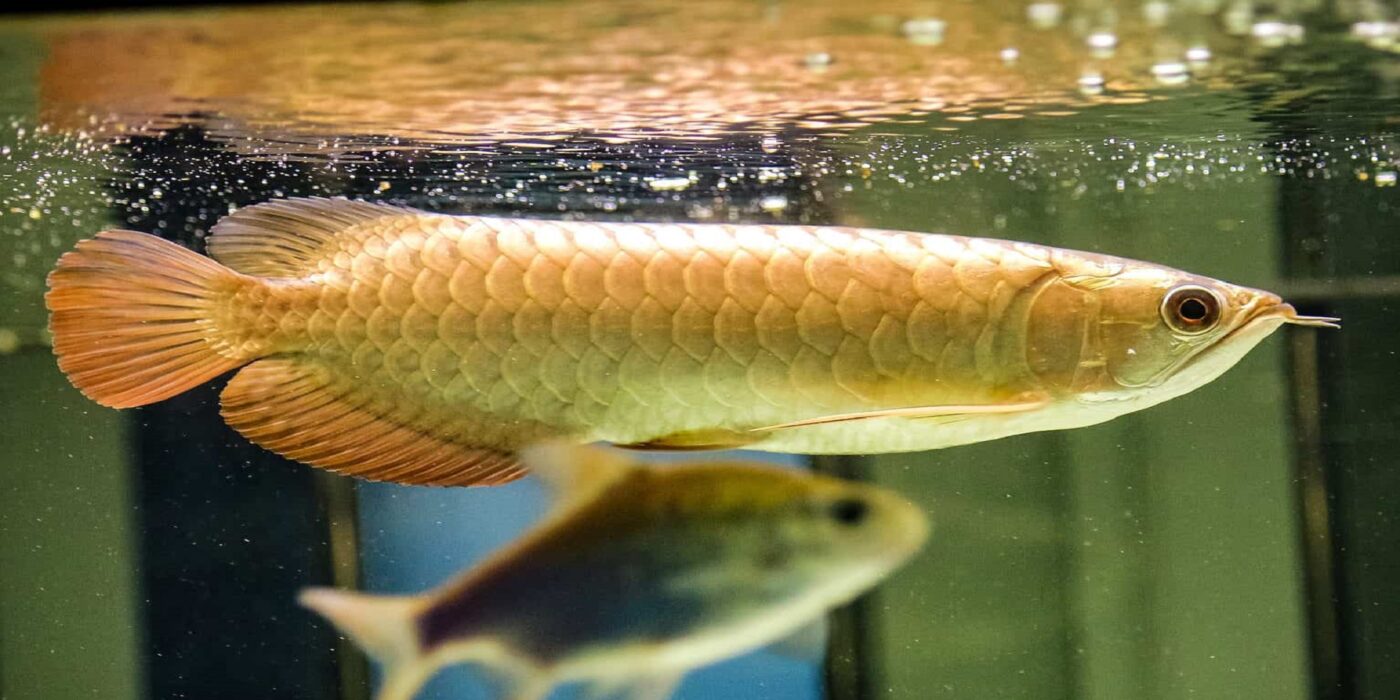
The growth trajectory of the Golden Arowana has long attracted attention among aquarists and ornamental fish researchers, not only because of its commercial value but also due to its distinctive biological development.
While casual discussions often reduce growth to feeding frequency or tank size, a closer examination suggests that size progression emerges from a more complex interaction between genetics, environmental stability, and husbandry practices.
Consequently, any attempt to generalize growth patterns should be approached with a degree of caution.
Interpreting Growth in Golden Arowana: A Conceptual Overview
From a biological standpoint, Golden Arowanas exhibit what may be described as non-linear growth. Early developmental stages are typically characterized by relatively rapid increases in length, whereas later phases tend to show a gradual deceleration.
This pattern appears consistent with broader ichthyological observations, where metabolic efficiency and resource allocation shift as the organism matures.
At the same time, disagreement persists within aquaculture discourse regarding the extent to which captive conditions can replicate natural growth rates. Some practitioners suggest that controlled feeding may accelerate development, while others caution that excessive intervention could compromise long-term physiological balance.
These tensions indicate that growth cannot be reduced to a single explanatory variable.
Golden Arowana Size Growth Chart
The chart below offers an approximate representation of growth under stable and well-maintained conditions. It should be interpreted as a flexible guideline rather than a fixed standard, given the variability observed across individuals.
| Age | Estimated Size | Development Notes |
|---|---|---|
| 2–3 months | 10–15 cm | Rapid early growth; strong feeding response |
| 4–6 months | 15–25 cm | Noticeable elongation; increased activity |
| 6–12 months | 25–40 cm | Growth stabilizes gradually |
| 1–2 years | 40–60 cm | Structural development; color begins to intensify |
| 2+ years | 60–90 cm | Slower growth; maturation phase dominates |
Factors That May Influence Growth Rate
1. Environmental Stability
Water quality appears to play a central role in shaping growth consistency. Fluctuations in temperature, pH, or dissolved oxygen may disrupt metabolic processes, thereby slowing development. By contrast, stable aquatic conditions tend to support more predictable growth trajectories.
2. Nutritional Strategy
Feeding practices remain a subject of ongoing debate. While high-protein diets are frequently associated with faster growth, some aquarists argue that excessive feeding may produce imbalanced development or long-term health complications. A moderated and varied feeding regime is often considered more sustainable.
3. Tank Dimensions and Spatial Constraints
Spatial limitation is commonly cited as a restricting factor in fish growth. Although the precise mechanisms remain contested, it is widely observed that confined environments may inhibit full size potential. Larger tanks, in contrast, appear to facilitate more natural movement and proportional development.
4. Genetic Variation
Not all Golden Arowanas exhibit identical growth potential. Differences in lineage, breeding practices, and genetic inheritance may result in significant variability. This suggests that genetics may exert a stronger influence than is sometimes acknowledged in hobbyist discussions.
Common Misinterpretations About Growth
A recurring misconception involves equating rapid growth with optimal health. While accelerated size increase may appear desirable, it does not necessarily indicate balanced development. In some cases, slower and more consistent growth may reflect more stable physiological conditions.
Another common assumption is that all individuals should conform to identical size benchmarks. In practice, variation is not only expected but biologically normal, reflecting differences in both internal and external conditions.
Linking Growth to Long-Term Care Practices
Growth should not be understood as an isolated outcome but rather as part of a broader husbandry framework. Tank maintenance, feeding consistency, and stress management collectively shape developmental trajectories over extended periods.
For those interested in comparing specimens at different stages of development, exploring available Golden Arowana listings may provide a practical reference point. Likewise, reviewing structured care practices can offer additional insight into how environmental conditions influence growth outcomes.
Conclusion
The growth rate of Golden Arowana cannot be reduced to a single determining factor. Instead, it emerges from a dynamic interplay between biological predisposition and environmental management.
While generalized charts may provide useful orientation, they should be interpreted with flexibility, acknowledging the variability inherent in living systems.
A more nuanced understanding of growth may ultimately support better care practices and more informed expectations, particularly for those engaging with this species over the long term.
