
Uncategorized
Why arowana fish jump out of tanks
Why Arowana Fish Jump Out of Tanks (+ How to Prevent It)

One of the first things experienced fishkeepers warn new owners about is how easily an arowana can jump out of an aquarium. It happens more often than most people realize. A healthy arowana can launch itself several feet into the air within seconds, especially if it becomes startled or stressed.
In the wild, arowanas naturally leap above the water surface to catch insects, frogs, and even small birds hanging from branches. That instinct never disappears in captivity. Unfortunately, in a home aquarium, jumping usually leads to severe injuries or death.
The good news is that this behavior can usually be prevented once you understand what triggers it. In this guide, we’ll explain why arowana fish jump out of tanks, the warning signs to watch for, and how to create a safer environment for long-term health.
Why Arowanas Are Natural Jumpers
Arowanas are surface-dwelling predator fish. In rivers and flooded forests, they spend most of their time cruising near the top of the water looking for movement above them. Their body shape, muscular tail, and upward-facing mouth are all designed for explosive upward motion.
Even captive-bred fish still carry these instincts. Sudden movements, bright lights, loud noises, or territorial stress can trigger an immediate jumping response.
Many owners underestimate how powerful these fish become as they grow. A juvenile may seem calm for months, but once it gains size and confidence, jumping incidents can happen unexpectedly.
Arowanas rarely jump “for no reason.” In most cases, there is an underlying environmental or stress-related trigger inside the aquarium.
Poor Water Quality Is a Major Trigger
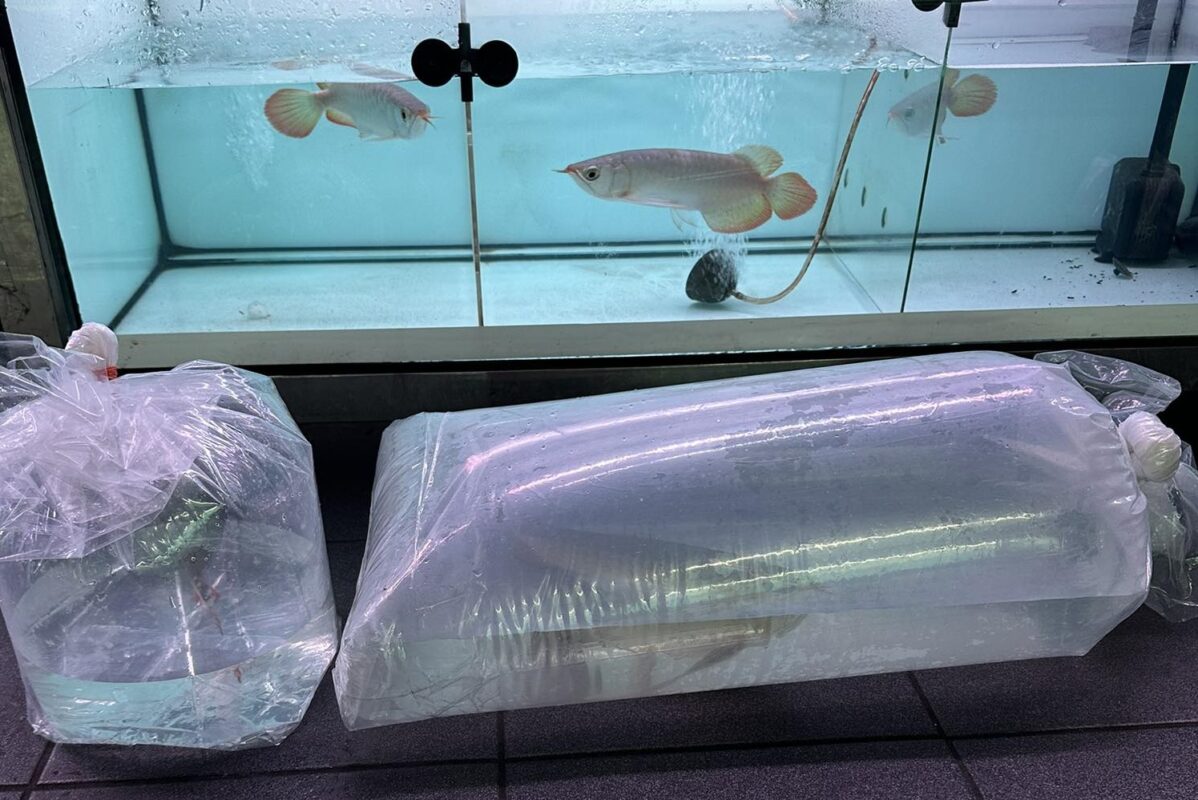
One of the biggest causes of jumping behavior is declining water quality. Arowanas are sensitive to ammonia spikes, unstable pH levels, and low oxygen conditions.
When water conditions become uncomfortable, the fish often becomes restless and starts pacing aggressively near the surface. Some owners notice repeated splashing before a full jump eventually happens.
If your aquarium is newly set up, make sure you understand proper biological filtration and nitrogen cycling. An uncycled tank is one of the fastest ways to stress large predator fish.
You can learn more about proper aquarium cycling in our guide to cycling an arowana tank safely.
For beginners, testing water weekly is a smart habit. Monitoring ammonia, nitrite, nitrate, and pH levels can help prevent problems long before your fish starts showing visible stress.
Tank Size Problems Often Increase Stress
Arowanas grow surprisingly fast under proper conditions. Many species eventually require aquariums larger than 200 gallons. Keeping a large fish inside a cramped tank creates constant stress and territorial frustration.
Fish that feel confined often become nervous, hyperactive, or aggressive. Some begin striking lids or darting rapidly when someone walks near the aquarium.
If you are unsure whether your setup is large enough, our complete arowana tank size guide explains the minimum dimensions recommended for different species.
Long tanks usually work better than tall tanks because arowanas need horizontal swimming space rather than vertical depth.
Sudden Movements and External Stressors
Even healthy arowanas can become startled easily. Slamming doors, pets running near the aquarium, flashing lights, or fast hand movements can trigger panic reactions.
This is especially common at night when room lights suddenly switch on. Some fish react instantly and hit the lid before owners even realize what happened.
Try to keep the aquarium in a quieter part of the house with stable lighting conditions. Avoid tapping on the glass or making sudden movements around the tank.
Tank Mates Can Also Cause Jumping
Aggressive or incompatible tank mates are another overlooked cause of jumping behavior. Arowanas may become stressed if they are constantly chased, nipped, or challenged for territory.
Certain aggressive cichlids and overly active fish species can make the aquarium feel unstable. Even if no physical injuries are visible, chronic stress can eventually trigger dangerous escape attempts.
If you plan to build a community setup, check our recommendations for compatible fish that live well with arowanas.
The Importance of a Secure Aquarium Lid

A secure lid is absolutely essential for keeping arowanas safely. Unfortunately, many standard aquarium covers are not strong enough for adult fish.
Heavy-bodied species like Asian arowanas and silver arowanas can easily push weak lids upward during a jump.
A few important lid recommendations include:
- Use thick glass tops or reinforced acrylic covers
- Secure all feeding openings tightly
- Check for gaps around filters and tubing
- Avoid lightweight plastic covers on large tanks
- Inspect lid stability regularly as fish grow larger
Some experienced keepers even add extra clips or weights to prevent accidental openings.
Signs Your Arowana Is Uncomfortable
Arowanas usually display warning signs before jumping incidents occur. Learning to recognize these behaviors early can help prevent serious accidents.
- Frequent pacing near the surface
- Sudden darting movements
- Repeated splashing
- Loss of appetite
- Aggressive reactions during feeding
- Constant hiding or nervous swimming
Healthy arowanas normally swim calmly and confidently. Sudden behavioral changes almost always indicate stress somewhere in the environment.
How to Reduce Jumping Behavior Long-Term
Preventing jumps is mostly about creating stability. Arowanas thrive when their environment remains predictable and stress free.
Simple improvements often make a major difference:
- Maintain consistent water parameters
- Perform regular water changes
- Upgrade undersized aquariums early
- Use strong biological filtration
- Avoid overcrowding the tank
- Keep lighting schedules consistent
- Choose peaceful compatible tank mates
Proper nutrition also helps reduce stress. Feeding high-quality foods on a regular schedule encourages calmer behavior and healthier growth.
For feeding recommendations, visit our complete arowana feeding guide.
Understanding Natural Predator Behavior
Many people forget that arowanas are still wild predators at heart. Their jumping ability is not a flaw — it is part of what makes them such fascinating fish to keep.
In fact, researchers studying wild Asian and South American arowanas have documented powerful hunting jumps used to catch prey above the water surface.
You can read additional biological information about arowana species from the Animal Diversity Web.
Once owners understand this natural instinct, preventing accidents becomes much easier through proper aquarium planning and stress reduction.
Final Thoughts
Arowanas are intelligent, powerful fish that require stable environments and secure aquariums. Jumping behavior is usually linked to stress, poor water quality, tank size limitations, or sudden disturbances around the aquarium.
Fortunately, most jumping incidents can be prevented with careful preparation. Strong lids, proper filtration, peaceful tank setups, and consistent maintenance routines all play an important role in keeping these fish healthy and safe.
With the right setup, arowanas often become calm centerpiece fish that display incredible personality and graceful swimming behavior for many years.
Frequently Asked Questions
Do all arowana species jump?
Yes. Most arowana species are natural jumpers because they hunt near the water surface in the wild.
Can arowanas survive after jumping out of the tank?
Some survive if discovered quickly, but many suffer severe injuries or internal damage. Prevention is always safer.
What is the best lid for an arowana tank?
Thick glass lids or reinforced acrylic covers are usually the safest options for large adult arowanas.
Does tank size affect jumping behavior?
Yes. Small tanks often increase stress and territorial frustration, which can lead to jumping attempts.
How do I calm a stressed arowana?
Improve water quality, reduce sudden disturbances, provide enough swimming space, and maintain stable feeding and lighting schedules.
